
Progressing from Scoping & Options
Ennovus Solutions worked with a large food manufacturing facility to develop a detailed technical feasibility study evaluating the renewable generation options at two of their sites. Across the two sites, there is excellent scope for ground mounted, roof mounted and carport solar PV, which were all considered during this project.
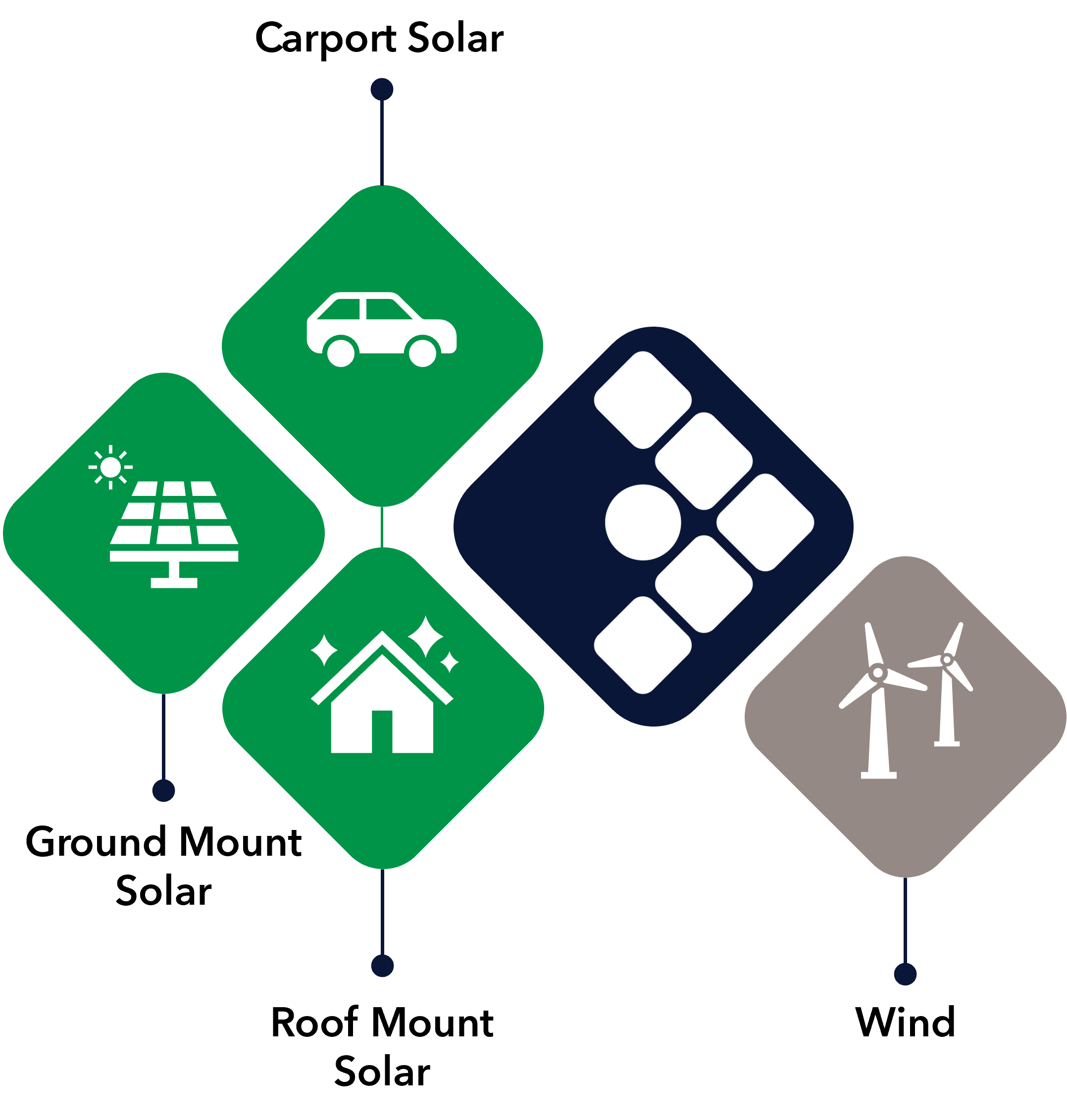
Prior to initiating the Stage Two Technical Analysis, an initial Stage One Scope & Options report was prepared, in-line with the structured and staged process adopted by Ennovus. This allowed for all areas and different renewable generation technologies across the two sites to be assessed from a high-level before proceeding to a technical feasibility study for the selected areas and technologies.
As the sites operate 24/7, finding ways to reduce the sites’ carbon footprint, scope two emissions, operational expenditure and secure a long-term, low-cost energy source was a key driver. Furthermore, the renewable generation could provide the sites with additional opportunities to decarbonise existing processes.
Developing the Technical Solutions
Following some technologies being discounted during Stage One, the Stage Two Technical Analysis focused on a few key areas for each site:
- Site One – Ground Mount Solar, Roof Mount Solar
- Site Two – Roof Mount Solar, Ground Mount Solar, Carport Solar
Each area and technology were analysed in accordance with Ennovus’ standard Stage Two process, to define the system and assess the technical and commercial viability, with additional studies also being conducted to enhance the output of the report and provide further certainty in the recommended solutions. The additional studies included:
- Site One – Roof structural survey and sign-off, landscape and visual impact assessment (LVIA), preliminary ecological appraisal report (PEAR), and a pre-planning application
- Site Two – Roof structural survey and sign-off
Overcoming Challenges
During the development of any large-scale project, it is always anticipated that there will be some challenges along the way, which only reinforces the rationale behind adopting a structured process to achieve a level of certainty before committing time and expense to a solution. For both main challenges which were encountered during the project, Ennovus were able to find and develop technically and commercially attractive solutions.
A Novel Solution to a Fibre Cement Roof
Site two presented a challenge for installing roof-mounted solar, as a portion of the roof is a fibre cement cladding. Fibre cement roofs pose no issue when left undisturbed, but makes installing solar more difficult, due to the fragile nature of the roof sheets and the risks associated with drilling into the material.
Ennovus proposed the Solfit overcladding solution, which provides a secondary structure above the existing roof by fitting interconnected solar PV panels, rooflights and flashings. This means a significant size PV system could be installed, without the need of replacing the existing roof or risk fitting solar panels directly to it. This would provide the below additional benefits:
- Increase solar generation at the Site Two by 504 MWh/year.
- Refurbish the existing fragile roof, including the skylights.
- Provide greater thermal insulation, reducing heating costs.
Working within Grid Constraints
A budgetary G99 application was made to the local DNO for each site. In both cases, the capacity applied for (4 MW for Site One, and 2.3 MW for Site Two) was not deemed feasible for connection until 2032. Through dialogue with National Grid the only option available to connect solar in an expedited timeframe was to reduce the system size to 949 kW.
To ensure our client could start benefiting from generation and start reducing operational expenditure as soon as possible, a phased installation was proposed, reducing the AC rating of first phase to 949 kW, whilst making provisions for the second phase to be installed once capacity on the grid network is available.
Solutions Tailored for Each Site
Through a detailed cost benefit analysis, of each of the technologies, the following solutions were recommended at each site. The solutions were selected due to their high generation potential, significant grid offset, whilst still providing very favourable financial benefits and payback periods. Subject to the outcome of the grid approval, it is expected that the installations at both sites will adopt a phased approach.
| Site | Technologies | System Size (MWp) | Generation (MWh/year) | Grid Offset (%) | Lifetime Carbon Savings (tonnes) |
| One | Roof Mount Solar | 3.7 | 3,442 | 17 | 6,770 |
| Two | Roof Mount, Ground Mount, & Carport Solar | 1.5 | 1,403 | 14 | 4,062 |
Next Steps
Our client is currently reviewing Ennovus’ reports and proposals for both sites, before moving onto the Stage Three Business Case, which will further develop each of the recommended solutions into a ‘ready to build’ project. This will involve undertaking detailed design, full grid permission, prior approval from the local planning authority, and tendering for the installation and equipment.
“Ennovus Solutions were a pleasure to work with throughout the whole process. They have enabled us to identify some great opportunities to help transition our electrical infrastructure into green renewable energy, which will ultimately reduce our carbon footprint”
Energy Systems Manager